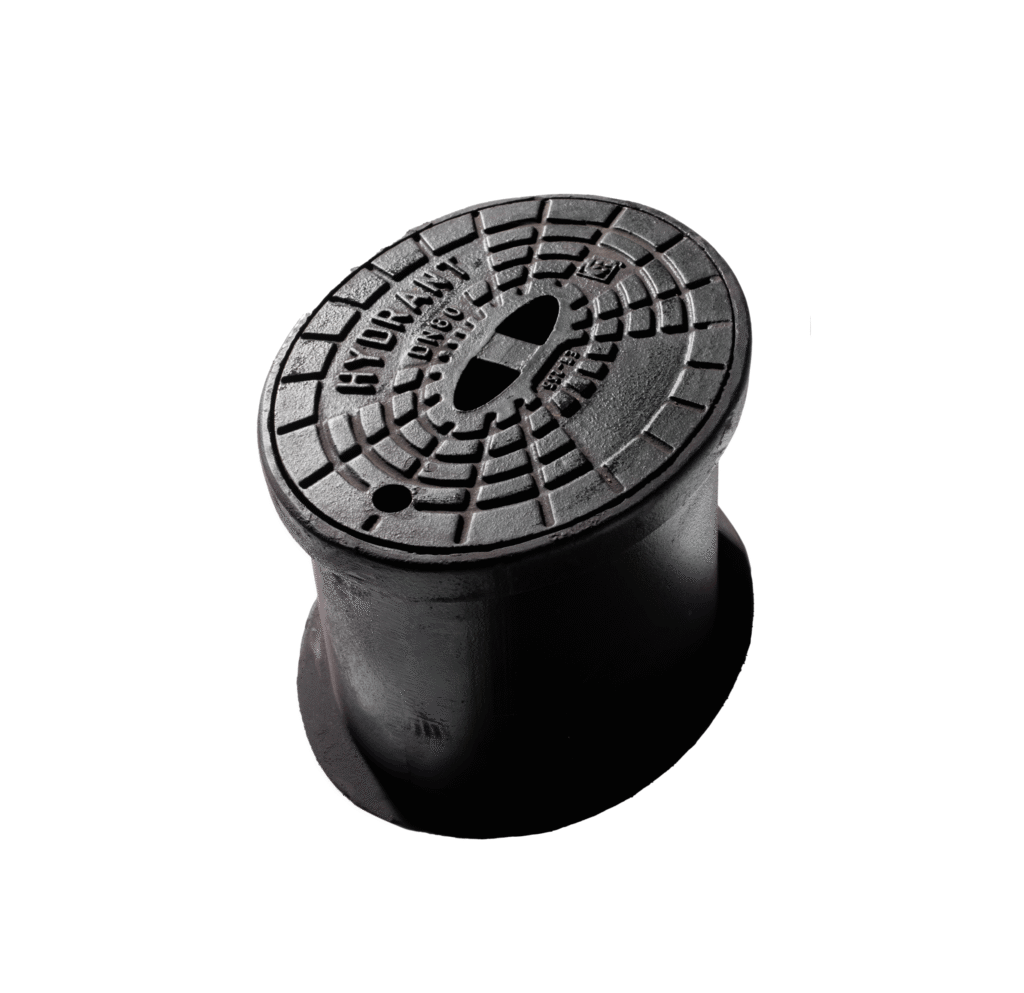
Cast iron hydrant valve boxes protect underground fire hydrants, which are crucial for fire safety. They provide quick and secure access during fires, inspections, and maintenance of the water supply system.
They are used in cities, industrial zones, warehouse facilities, shopping centers, logistics parks, and residential areas with limited heavy vehicle traffic.
The height of 305 mm allows easy installation into various chambers. The cover protects the hydrant from damage and unauthorized access.
The cover protects the hydrant from unauthorized access and is easily identifiable in the field for quick response in case of fire.
Drawing of the hydrant box cover D400 DN80. Top View
Drawing of the hydrant box cover D400 DN80. Section View
Drawing of the cast iron hydrant box frame D400 DN80. Cross-section view
Drawing of the cast iron hydrant box frame D400 DN80. Cross-section view
Preparation of the substrate
Check the stability and evenness of the substrate. The substrate must be load-bearing, compacted, and prepared according to the project documentation requirements. .
Placement of the frame (base)
The valve box frame is placed into a bedding of concrete mix with a minimum grade of C25/30. It is essential to ensure the correct height and levelness of the frame according to the final surface of the roadway.
Height adjustment
If necessary, use height-adjustable elements or a concrete extension to ensure the lid is flush with the surface (e.g., asphalt, paving).
Concreting the frame
If needed, use height-adjustable components or a concrete riser to make sure the lid is level with the surface (e.g., asphalt, paving).
Fitting the lid
After the concrete has cured, place the lid into the frame. Check its free movement and proper seating.
Final inspection
Verify proper seating, closing functionality, and overall stability. The manhole cover must be securely installed and must not wobble.